
Why Resistance Bands are a Must for Strength Training

You may have seen people using resistance bands in the gym and wondered if it “why use a band when you can use weights?”
In this post we’ll introduce you to the benefits of resistance bands for strength training. We'll also share a full body workout for beginners, as well as some tips on how to make the most out of your resistance band training.
So, let's get started!
The Benefits of Resistance Bands
Resistance bands are a great tool for strength training because they're versatile, portable, and relatively affordable.
They're also a great option for beginner and intermediate lifters, as they can be used to gradually increase the difficulty of an exercise as you get stronger.
Here are some of the other benefits of using resistance bands for strength training:
Improved Balance and Coordination
Because resistance bands offer an unstable form of resistance, using them can help improve your balance and coordination. This is beneficial not only for athletes but also for older adults who may be at risk of falls.
Joint-Friendly
If you have joint issues or are recovering from an injury, using resistance bands may be a better option than traditional weightlifting exercises that put unnecessary stress on your joints.
Full-Body Workouts
Unlike machine-based exercises that focus on isolating specific muscle groups, resistance bands allow you to quickly change angles and body positioning. For instance, if you’re doing a chest press with a door anchor, you can quickly swing around and perform a back row. This makes them ideal for full-body workouts.
Now that we've gone over some of the benefits of using resistance bands, let's take a look at how to get started with them.
Getting Started with Resistance Bands
If you're new to strength training, start with a light band and gradually increase the difficulty as you get stronger.
When choosing a band, make sure it provides enough resistance to challenge you. Just make sure you can complete the desired number of repetitions.
If you're using a band with handles, make sure to grip the handles tightly to prevent the band from slipping out of your hands during an exercise. Foam handles can be harder to hold, especially if the handles become sweaty. Instead opt for an upgraded handle grip that is made of TPS rubber.
Whether you're just starting out on your fitness journey or you're looking for a way to mix up your existing routine, this full-body resistance band workout is for you. And, best of all, these exercises can be done anywhere with little to no setup time.
To start, we'll focus on toning the arms.
Resistance Band Exercises: Triceps
For triceps, we'll do overhead extensions.
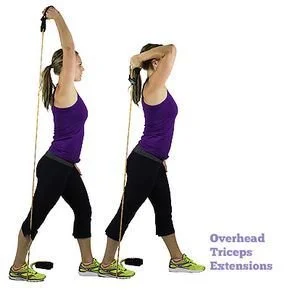
Start by holding the band behind your head, with your palms facing up. Then, extend your arms straight overhead. Keep your core engaged throughout the movement.
Resistance Band Exercises: Biceps
For biceps, we'll do curls.

Start with the band under your feet and hold the handles in each hand, with your palms facing forward. Curl your hands up towards your shoulders, keeping your upper arm still throughout the movement.
Squeeze and hold at the top of the movement for 10 seconds. The lower and repeat for 10-15 repetitions.
Lower Body Exercise
with Resistance Bands
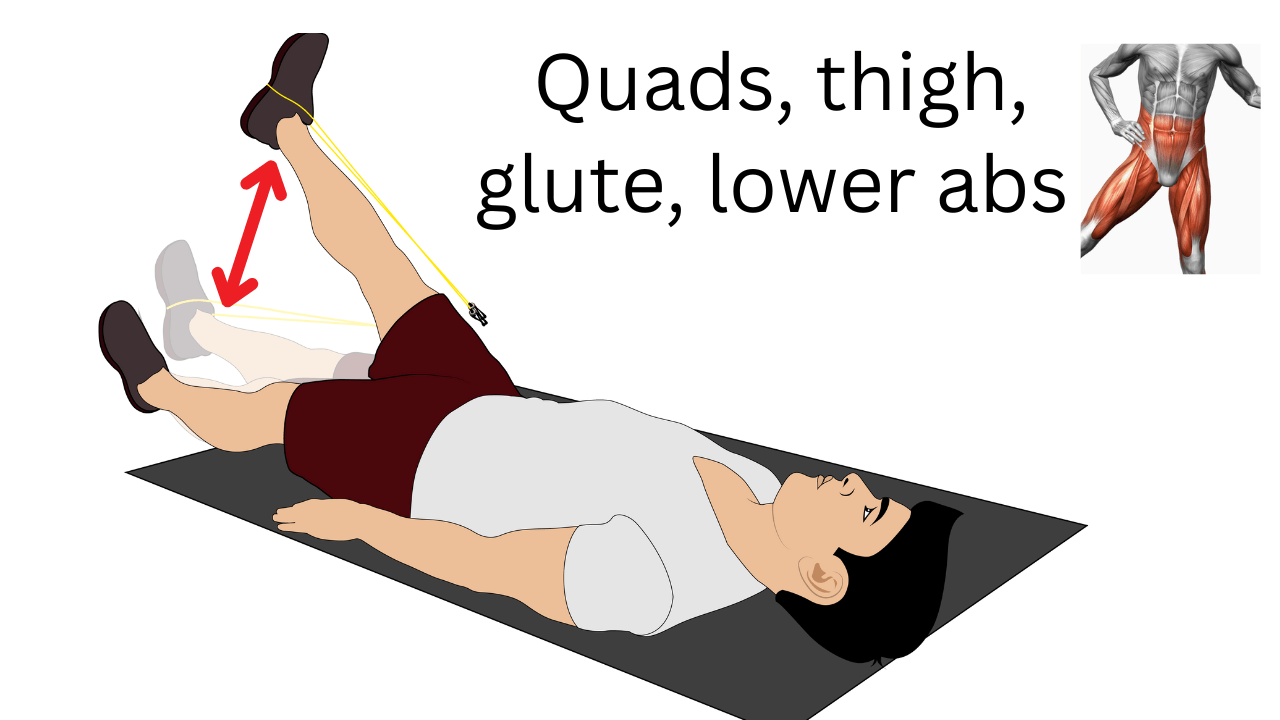
Next, we'll move on to toning thighs.
For these moves, you’ll need a door anchor with a d-ring on it to connect your band to.
• Place the door anchor at the bottom of the door.
• Clip both sides of the resistance band to the d-ring on the door anchor.
• Put the loop part of the band around your foot or ankle. Make sure the band is secured.
• Move away from the anchor point until you feel sufficient tension on the band.
• Slowly lift your leg up and down, while maintaining the same starting position.
These are very basic beginner exercises. If you’re looking for more challenging resistance band workouts, then start using Tension Toner.
Share this post with your friends.
